OEM Home Storage Products: From Sample Request to Bulk Production
A step-by-step overview of the inf…
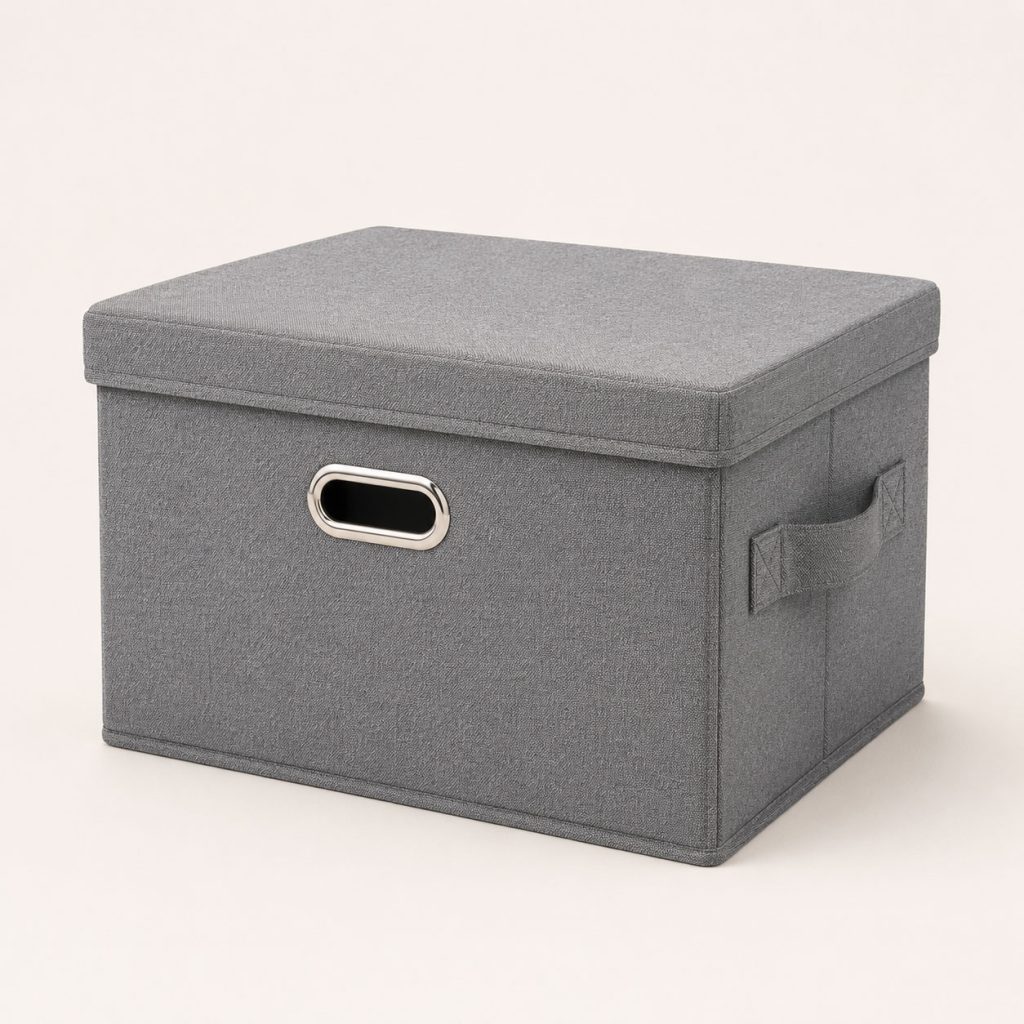
An OEM home storage project moves faster when the buyer and supplier agree on what must be decided at each stage. Many delays are not caused by production itself; they come from incomplete specifications, changing artwork or packaging details that were never confirmed in the sample.
Stage 1: Prepare a complete product brief
Start with the basic commercial information: product type, target market, expected retail channel, order quantity and destination. Then define the product itself: size, material, color, structure, logo, labels and packaging. Reference images are helpful, but they should be accompanied by written requirements because images do not show thickness, reinforcement or tolerance.
If you are matching an existing product, send a physical reference sample when possible. Clearly identify which details must be copied and which may be adjusted.
Stage 2: Review feasibility and quotation assumptions
The supplier should confirm which requirements can use an existing construction and which require new materials, tooling or patterns. A useful quotation states its assumptions. For example, it should identify the material, dimensions, logo method, packaging and quantity used to calculate the price.
At this stage, ask separate questions about sample cost, sample time, production lead time, payment terms and carton information. Do not assume that a production quotation automatically includes custom retail packaging or testing.
Stage 3: Develop and evaluate the sample
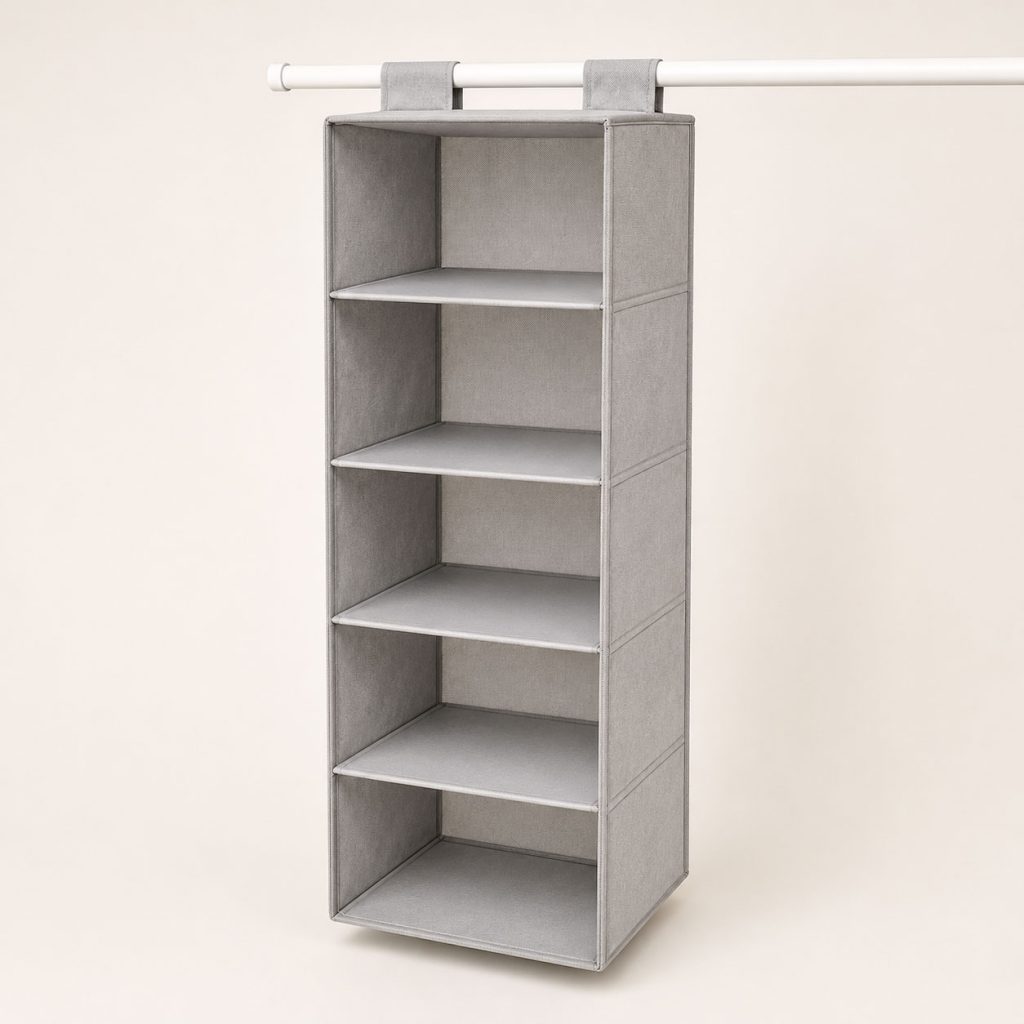
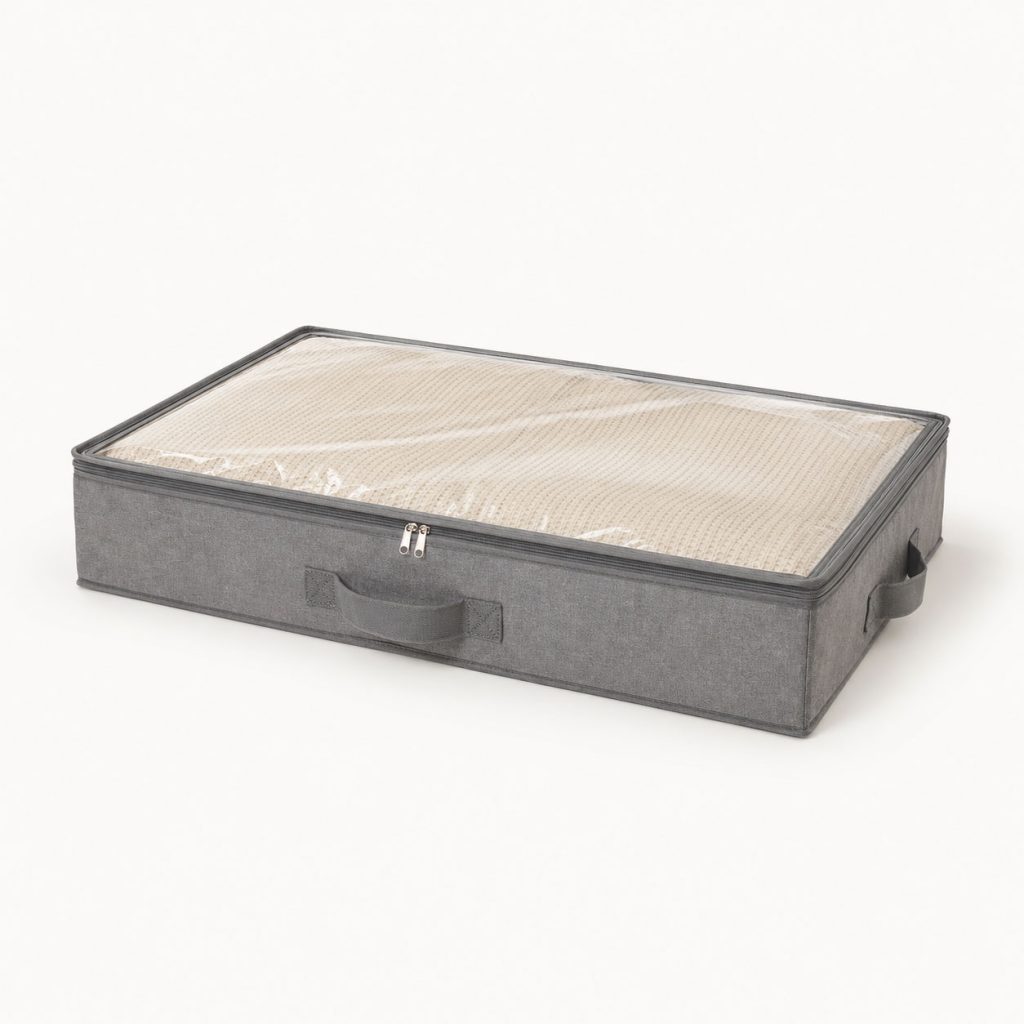
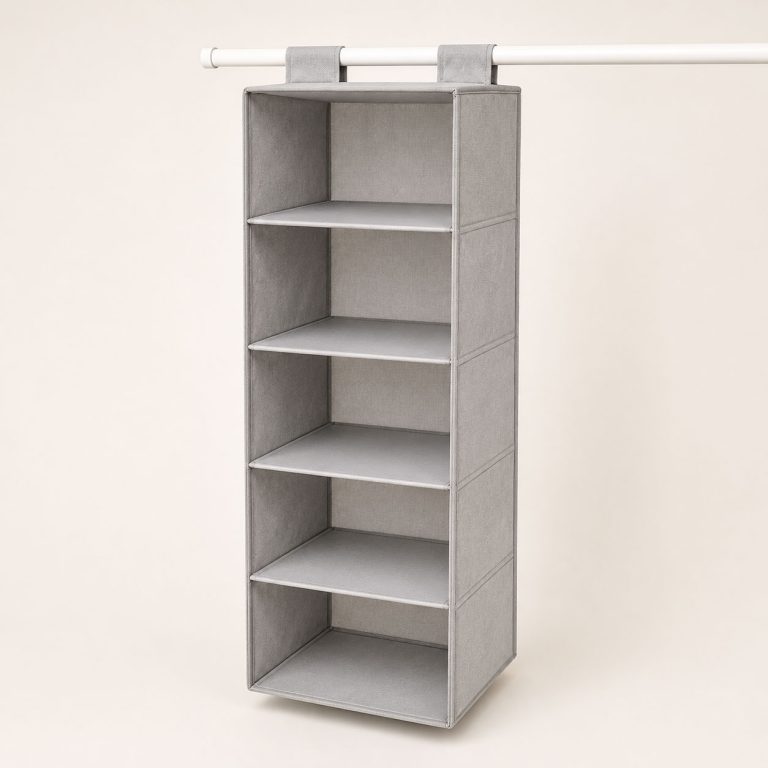
A sample is not only for checking appearance. Evaluate dimensions, capacity, stability, stitching, handles, zipper movement, folding, odor, color and packaging. For a hanging organizer, test the hook or hanging system under load. For a storage bag, open and close the zipper repeatedly and carry the bag with representative contents.
Record feedback in one document with numbered photos. Scattered messages can create conflicting instructions. When a revised sample is needed, state which earlier points are accepted and which remain open.
Stage 4: Approve artwork and packaging
Logo files should be supplied in a usable format, with dimensions, color references and placement marked on the product. Packaging artwork should include barcode, country-of-origin information, warnings and any channel-specific labels required by the buyer.
Approve a final visual proof and, where necessary, a physical packaging sample. A product can pass inspection and still create problems if the barcode is wrong or the carton marking does not match the shipping plan.
Stage 5: Confirm the pre-production specification
Before bulk production, combine the approved details into one final specification. This document should cover the product, materials, measurements, workmanship, logo, packaging, carton marks and inspection requirements. It should also identify the approved sample or revision date.
The purchase order and the specification should agree. If the two documents use different quantities, colors or packaging, production is exposed to avoidable risk.
Stage 6: Production and quality checks
Quality control should focus on the risks of the specific product. Common checkpoints include incoming fabric and accessory checks, first-piece confirmation, in-process workmanship review and pre-shipment inspection. The exact plan depends on the order and should be agreed rather than assumed.
- Verify material and color against the approved sample.
- Measure critical dimensions using an agreed tolerance.
- Check seams, handles, zippers, labels and reinforcement.
- Confirm individual packaging, carton quantity and carton marks.
- Record defects and corrective action before shipment.
Stage 7: Shipment and repeat-order control
Before shipment, confirm the packing list, carton dimensions, gross weight, shipping marks and document requirements. Keep the final approved specification and production sample for repeat orders.
For the next order, do not rely only on the phrase “same as last time.” Review any changes in material availability, packaging regulations, artwork or destination requirements. A short repeat-order confirmation can prevent a successful first order from becoming an inconsistent second order.
A clear OEM process protects both sides. The buyer gains better control over quality and timing, while the supplier receives the information needed to plan materials, production and inspection accurately.