Under-Bed Storage Bags: 10 Checks Before You Place a Bulk Order
Ten practical checks for comparing…
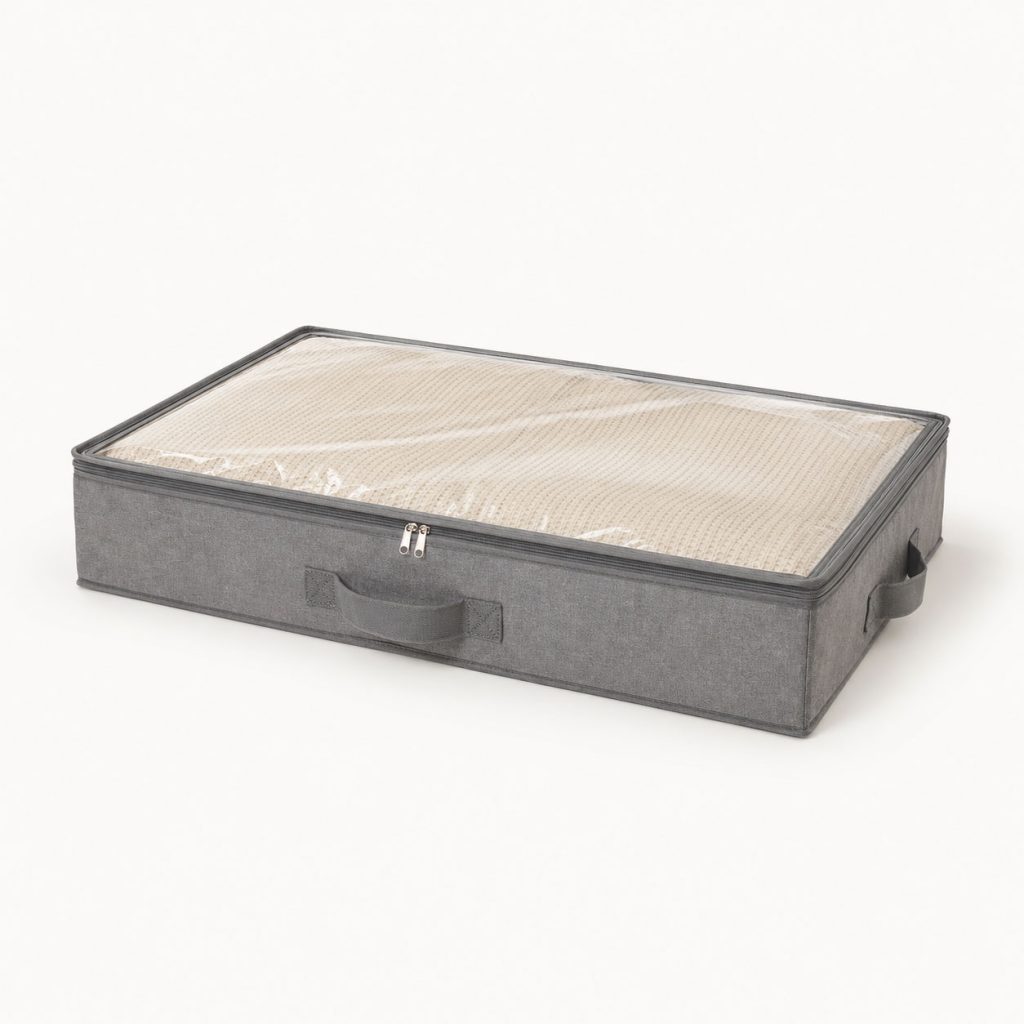
Under-bed storage bags are popular because they use otherwise empty space and can fold flat when not in use. For a buyer, however, the category contains many products that look similar online but perform differently after they are filled, carried and shipped. These ten checks help turn a general request into a usable bulk-order specification.
1. Measure the real clearance under the bed
Do not select the product only by storage capacity. Height is often the most important measurement. Confirm the external dimensions when the bag is filled and allow space for the zipper, handles and any reinforced panel. A bag that is too tall may look acceptable when empty but fail in actual use.
2. Define what the bag will hold
Bedding, seasonal clothing, shoes and toys create different loads and shapes. The intended contents determine the required fabric, reinforcement and handle construction. A soft bag for blankets may not need the same structure as a bag intended for heavier mixed items.
3. Review fabric weight and backing
Ask for the material specification rather than a general description such as “non-woven.” Check fabric weight, backing, coating if any, odor and resistance to tearing around seams. The bottom panel deserves special attention because it supports the contents when the bag is moved.
4. Test the zipper path
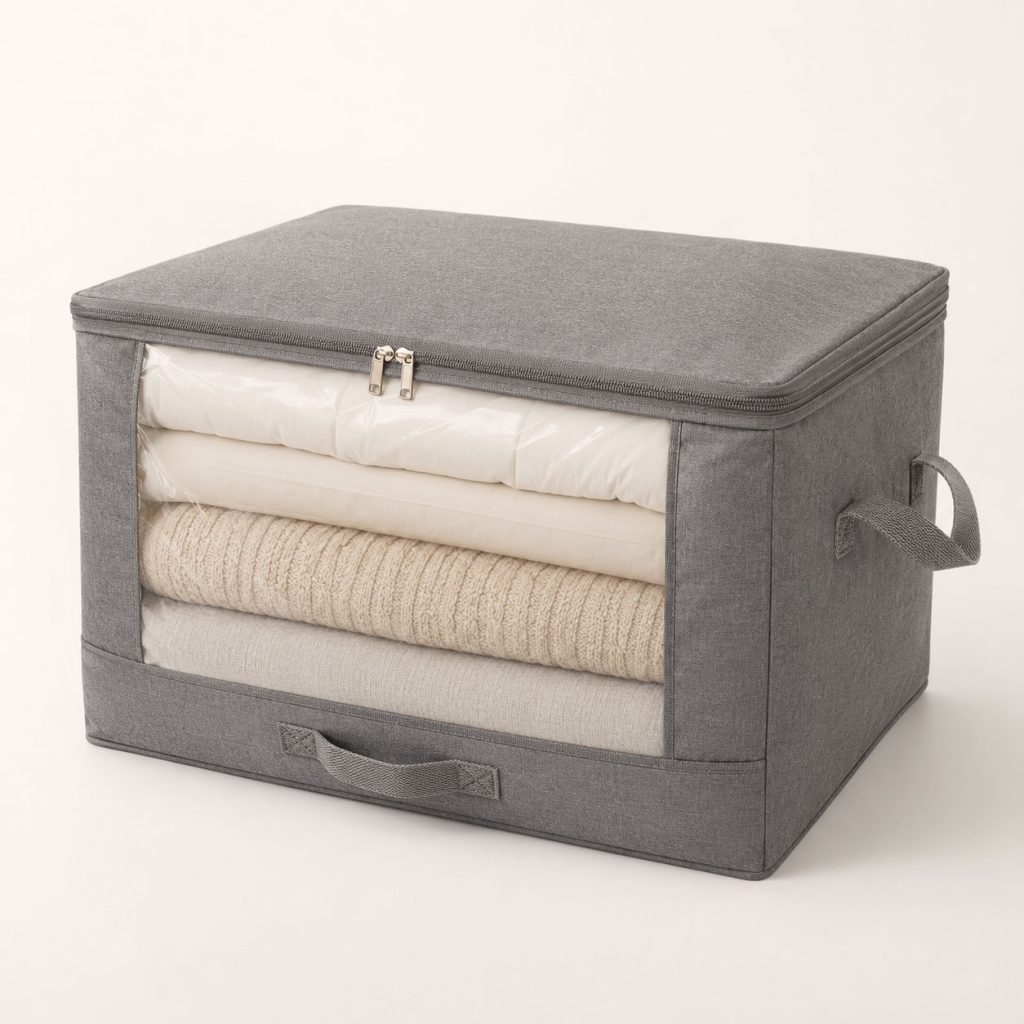
A two-way zipper can improve access, but only if it moves smoothly around the corners. Test repeated opening and closing on a filled sample. Confirm zipper size, puller design and how the zipper ends are finished.
5. Check handle reinforcement
Handles are a common failure point. Review the handle material, width, stitching pattern and the size of the reinforced attachment area. Test the product with a representative load rather than pulling an empty bag.
6. Evaluate the clear window
A front window helps customers identify stored contents. Confirm window size, transparency, thickness, odor and stitching. The window should remain useful after the bag is folded and packed; excessive creasing can reduce shelf appearance.
7. Decide whether structural panels are needed
Some under-bed bags are intentionally soft, while others include reinforced sides or bases. Reinforcement improves shape but adds cost and packed volume. Choose the structure according to the sales promise and target retail price.
8. Approve color, logo and label position
Neutral colors such as beige, grey and black are common, but bulk color should be approved against a standard or physical sample. If adding a logo or woven label, review its position when the bag is both closed and filled.
9. Inspect the product in final packaging
Packaging pressure can create creases, zipper deformation or window marks. Ask for the sample in the proposed individual package. Confirm insert cards, barcode labels, warning text and country-of-origin marking where applicable.
10. Calculate carton and freight efficiency
A low unit price can be offset by inefficient packed dimensions. Request pieces per carton, carton size, gross weight and net weight. Compare the folded construction and packaging method before finalizing the order.
Information to send with your inquiry
| Requirement | Example information |
|---|---|
| Product size | Length × width × filled height |
| Use | Bedding, clothing, shoes or mixed storage |
| Material | Fabric type, weight and reinforcement |
| Features | Two-way zipper, clear window, reinforced handles |
| Customization | Color, logo, label and packaging |
| Commercial | Quantity, destination and required delivery date |
When these points are confirmed in the sample and specification, buyers can compare quotations more fairly and reduce quality disputes after production.